
Most ABM programs break down in the execution behind the strategy
A target list that's too broad. Sales that agreed to the program but never really engaged. Plays that got built once, presented in a deck, and never run. Or maybe none of that exists yet. You're starting from scratch.

.svg)
Focus on what makes account-based marketing work
Narrow your go-to-market team's focus to the accounts that can actually buy, then get Marketing, Sales, and Success running plays together. Done well, it beats broader methods for the same spend.
Done badly, it's lead-gen with a fancy name. The list is the hard part. Getting it right takes real judgment about which accounts are true fits and whether your teams can actually reach the buying groups inside them. That's the part most programs get wrong.
We killed ABM. Then we brought it back.
If ABM feels like lead-gen with better targeting and a bigger price tag, that's a fair read of how most programs actually run. We declared ABM dead to say exactly that out loud. Then we walked that back, because the problem was never the model. It was the execution underneath it, the same operational gap most programs still have today.

What results can you expect with good ABM?
ABM done right trades broad effort for narrow focus. Here's what typically shifts once it's dialed in:

For the person walking these numbers into a board meeting, the real shift is predictability: pipeline you can forecast instead of defend, and a program that stops being the line item you explain every quarter.
Treat the account as a room of stakeholders
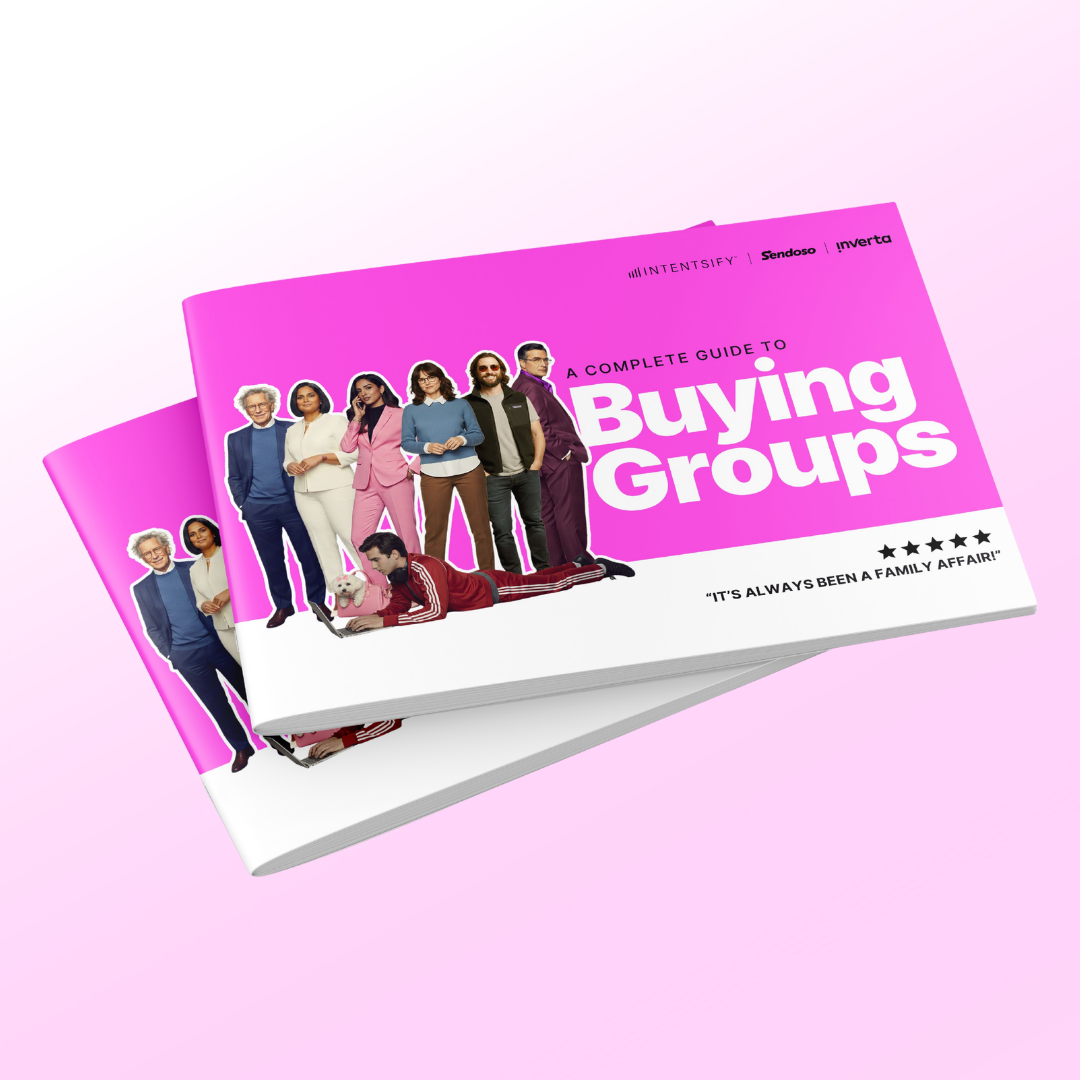
Buying groups take ABM a level deeper. Think of the account as a room full of stakeholders, each with a different stake in the outcome and a different objection standing between them and yes. Real ABM maturity means giving each of those roles specific attention, then helping that room reach consensus.
.png)
Use AI where it actually helps
Account and cluster research, buying-group insight, keeping shared context between sales and marketing, reading signals as they shift: these are the parts of ABM that eat the most time and get skipped first when a team is stretched. AI closes that gap, feeding straight into the workflows that run ads, outreach, and campaign engagement, so a signal turns into action while it's still useful.
Outcome: more focused programs, tighter Sales alignment, and account-level relevance that holds up over time.
Need help with it all? Here's what a good ABM agency does.
Another year running the same program is another year explaining the same numbers to the same board. Whether the fix is tightening what's already running or building the next one, here's where that conversation usually starts.
What does effective outside ABM help actually do?
It defines the buyer profile, gets Sales and Marketing aligned on the same accounts, builds the plays, and sticks around long enough to know if they're working.
How do you know you're ready?
You don't need a mature program to start. You need the willingness to commit to a defined buyer profile, built together, and a Sales team ready to work the same list Marketing builds from day one.
.webp)
Expect to work with us until its right
ABM takes iteration. Expect several rounds before it clicks. Here's what that looks like from your side of the table:
- Your ideal buyer profile gets defined from account data
- Marketing, Sales, and Success align early, while the list is still being built
- You end up with a target list you could defend line-by-line to your CFO
- You launch as a pilot, a tune-up, or a scale-up, depending on where you're starting
The steps stay the same no matter where you start. Only the timeline shifts. Most engagements begin as a 90-day pilot before scaling further, backed by a team that's watched these programs stall and fixed them for 30+ years combined, staying through execution because that's where most programs actually falter.

Why work with Inverta?
“We partnered with Inverta to realign our ABM … The results? A beautifully executed program that exceeded our objectives and substantially increased revenue."
.webp)
Stacy Wriston
Skip the templated playbook
No two ABM programs look the same. Every strategy starts from your account data, your product, and your company objectives. We've run enough of these to know where they typically go wrong, so you skip the mistakes and get straight to what works.


Resources to grow your ABM strategy
.webp)
.webp)
Frequently asked questions about ABM
What is account based marketing?


Account-based marketing, or ABM or ABX for short, is the strategy of reversing the typical marketing approach. Instead of messaging everyone possible to see who responds, you select accounts that are great fits for your product and are currently researching you. This allows you to coordinate your Marketing, Sales, and Success teams on landing or expanding just those. It takes a lot of certainty to pick the right accounts—which is why it’s helpful to have an account based marketing company help.
What is the difference between ABM and traditional Demand Generation?
Traditional demand generation is a volume game: you cast a wide net and filter out the bad fits later. ABM is a precision game: you identify the accounts that can actually buy (and renew) first, then focus your entire go-to-market motion on landing them. If you have a high average contract value (ACV) and complex buying committees, you don't need more leads; you need the right accounts.
What does successful ABM actually look like?
Account-Based Marketing success looks like revenue efficiency, not just lead volume. For example, when we helped Sysdig pivot to an ABM model centered on Net Revenue Retention (NRR), they didn't just get "leads"—they increased their marketing-sourced average contract size by 36%
Do we need a massive budget and a new tech stack to launch ABM?
You do not need a massive budget to launch ABM; in fact, many teams use expensive technology to avoid the hard work of alignment. You likely already have the tools you need—a CRM and a marketing automation platform—to start a pilot, meaning the cost is not in new software but in the reallocation of media spend from broad air cover to high-value, targeted touches.
Why do most ABM programs fail?
Account-Based Marketing programs fail when they are treated as isolated "marketing campaigns" rather than "company initiatives." If Marketing is measuring engagement while Sales is strictly hunting net-new logos in different territories, your ABM program will fail because success requires a shared scorecard where Sales and Marketing agree on the target list before launch.
How long until we see revenue from an ABM program?
ABM is a long-term strategy, not a quick fix. While you will see engagement spikes (website visits, account penetration) within the first 90 days, revenue realization depends on your average sales cycle. However, because you are targeting accounts with higher propensity to buy, that velocity often accelerates once the foundation is set.
How much does it cost to work with an ABM agency?
Cost scales with scope, not agency size. A single-list pilot costs far less than a rebuild spanning multiple business units. Most engagements start as a 90-day pilot, which gives you a real number to plan around before deciding whether to scale further.
Is an ABM agency the right choice for a one- or two-person marketing team?
Team size is not the deciding factor. Research, personalization, sales alignment, and reporting add up fast for a lean team. What matters more is whether the partner you bring in fills that gap or just adds another meeting to run.
When should you choose a specialist ABM agency versus a broader B2B marketing agency?
It depends on how isolated the problem is. If ABM is the one thing broken and everything else runs fine, a specialist can go deep fast. If ABM sits inside a bigger set of problems, pipeline, martech, reporting, working with a partner who runs all of it keeps everyone pointed at the same target list instead of three teams pulling in different directions.