

Darrell, James and Kelly are set up for success in 2026. Are you?
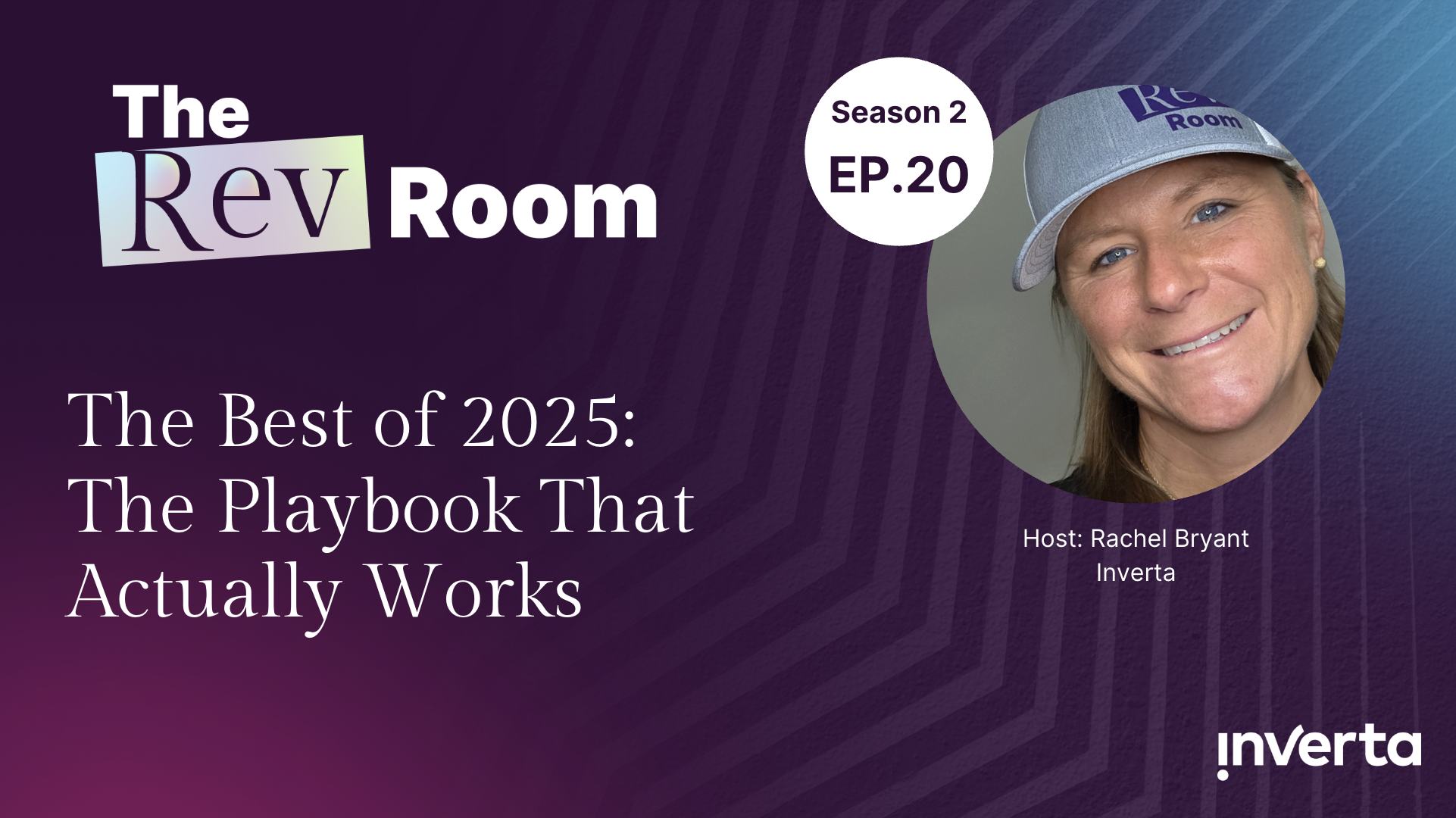
The way buyers buy today is profoundly different than it was even a few years ago. Your strategy must change to match. The latest B2B marketing playbook is not about mass production; it is about precision, deep partnership, and strategic impact.

In partnership with:
Featuring

Featuring
How are you going to stand out in 2026?
Buyers are in control of the buying process. Over 70% of it is happening online. And they are putting companies on their short list of vendors that provide value and establish trust with their content.
How are you accounting for this in your 2026 strategy?
You need to stand out. To make sure your buyers notice you. Let us help you build that into your strategy for next year -->


The Revenue Marketer

Darrell, James and Kelly are set up for success in 2026. Are you?
Still chasing 10% efficiency gains?
2023-2025 were the years of experimentation with AI. 2026 is the year to make it transformative. If you're still trying to figure out the strategic advantage AI will bring to your team, we're here to help!
The way buyers buy today is profoundly different than it was even a few years ago. Your strategy must change to match. The latest B2B marketing playbook is not about mass production; it is about precision, deep partnership, and strategic impact.
Based on insights from our conversation with some of the best B2B leaders, we have identified six critical shifts that separate a tactical team from a strategic growth partner.
Move from content as a campaign to a formal campaign planning framework
Many marketing teams fall into the trap of viewing a piece of content—like a white paper or a research report—as the campaign itself. They push it out and move on to the next thing. This approach is exhausting and unhelpful to prospective customers who may be at different stages of their buying journey.
The necessary shift is to implement a robust campaign planning framework with a singular message, orchestrated across multiple channels and targeting the entire buying committee.
Kelly Santos from Intelex detailed her team’s pivot away from pushing out content without a clear vision of the customer's journey. Her key steps for a successful framework include:
- Define objectives and key performance indicators first. Start by clarifying the goals you are trying to hit. This will define the type of campaign you need.
- Establish a formal RACI. Defining who is responsible, accountable, consulted, and informed is vital. This clarity is necessary for account-based strategies, which fail without a defined campaign structure.
- Co-create the plan. Ensure all functions are involved in defining the process. Kelly notes that working with partners can help establish best practices while allowing the team to tailor the process to their specific organization.
- Map to the buyer journey. The final plan must encompass the value proposition, messaging, high-value offers, and content that maps precisely to where the buyer is.
It was tough for us to say, 'Well, can we actually...' It was more in the spirit of continuous improvement than this is broken and we need to fix it. So I think going in with that mindset definitely helped for the team to feel motivated to come together and work on something. - Kelly Santos, Intelex
Transform marketing operations from order taker to strategic partner
The marketing operations team often finds itself in the role of button pusher, a tactical function executing the strategies of others. This limits the impact of the team and leads to burnout.
To become a strategic partner to the chief marketing officer, the operations team must initiate a shift in perception and priorities. Mike Rizzo and Darrell Alfonso recommend a listening tour as the critical first step to develop an implementation roadmap:
- Conduct the listening tour. Speak with key partners and leaders to identify their goals and biggest pain points. For a large organization, this can take over a month.
- Map operations to business outcomes. Take the pain points and goals gathered and map your team's projects, platforms, and processes that can support achieving those goals.
- Prioritize with data. Use a scoring methodology to create a prioritized and scored list of projects. This makes your roadmap objective and defensible.
- Present the strategy. Conduct the listening tour in reverse. Present your prioritized work back to the partners, showing them how your projects will help them achieve their goals.
...what you're going to do is you're going to list all of those things out and you go through a mapping exercise to understand which projects, platforms, and overall processes that you own control or influence that can actually support either helping achieve a goal or removing a blocker. - Darrell Alfonso
Use AI for content workflow instead of just automation
The promise of AI is content at scale, but the common mistake is to start with automation. If you automate a bad process with bad prompts, you simply get bad content faster.
The goal is not automation; the goal is quality content at scale. James Lamberti and Brian Schmid advise starting with the workflow first:
- Start with version one using manual agents. Before building automation, manually use your AI agents to ensure your prompts are working and producing consistent, high-quality output.
- Standardize your output. Use templates for your content assets so that the end goal of your production is a consistent outcome and format. This is better marketing because people become familiar with your conversation structure.
- Centralize data sourcing. Point your AI agents at your existing internal content to ensure the new content is authentic and grounded in your brand voice.
- Keep humans in the loop. Programmatic content does not work. You need a human editor to ensure the content does not sound like a robot and to check for brand consistency.
Prove long term value with financial data
Marketers are still frequently asked to generate pipeline this quarter, a request that is unrealistic in the complex buying cycles of B2B. To counter this, marketing leaders must shift the conversation from tactical requests to strategic business growth.
Kathy Macchi and Kerry Cunningham emphasize that this shift must be proactive and data-driven:
- Speak the language of the chief financial officer. Build a relationship with your financial leader. They own the budget and have the largest influence over the chief executive officer.
- Connect strategy to outcomes. Marketing leadership often struggles with planning. You must connect your business goals to your marketing strategy, link that to an actual outcome, and then tie that outcome to your budget.
- Educate on time lag. Use your own data to show the true time lag between investment and revenue. One marketing leader learned that from the time money was allocated, it took 18 months for the revenue to appear.
- Benchmark against your own data. Take industry research that outlines typical buying cycles, find that data in your own systems, and use that to align your leadership to how the world actually works.
Invest in customer marketing for predictable revenue retention
Customer marketing is an under-focused area in many B2B firms. However, net revenue retention is becoming a crucial data point, and customer marketing is its most critical driver.
Brittany Dawson from AlphaSense outlines a strategic approach to customer lifecycle marketing:
- Build the customer journey. Start by interviewing teams across the organization to understand who engages with customers and where the friction points are.
- Take it stage by stage. Because the journey is complex, start with one stage—like the trial period—and then build onto retention and renewal playbooks.
- Create adoption based playbooks. Define baseline adoption and create custom messaging playbooks for low, moderate, and high adoption to ensure content is relevant.
- Align to partner key performance indicators. Focus on how customer marketing can support the goals of the customer success and account management teams.
Target the buying committee instead of the individual lead
In complex B2B sales, the buying committee can include 10 to 20 individuals. The new playbook requires marketers to shift their focus from the single lead to engaging the entire group at scale.
Jeremy Schwartz from Palo Alto Networks proved this shift is possible in a large enterprise. His advice is to start small and prove the value with data that speaks to the buyer's self-interest:
- Start with the sales end point. They started their pilot with business development representatives because they knew they needed a motion for an opportunity with a buying group on it.
- Incentivize adoption with self interest. They targeted representatives by appealing to their compensation. They showed that by researching the buying group, the representative stood a better chance of creating a deal that actually closed.
- Keep it small and organic. They kept their first pilot limited to 40 representatives globally for three months. This allowed them to move fast and work out the kinks.
- Connect to revenue. When initial data was dismissed as small, they worked with the data science team to extrapolate the pilot data against the previous year’s actuals. The result: The strategy would have resulted in a 13 percent increase in revenue for the company.
So we went back to our CMO and we said, Hey. Just so you know, we took your advice and we thought about that and we wanted to let you know that we ran this and we didn't even focus on pipeline. We said if this had been applied last year. It would have been a 13 percent increase in revenue for the company. - Jeremy Schwartz, Palo Alto Networks
Conclusion
The thread connecting all these shifts is a move toward a more strategic, human-centric, and data-driven approach. It means rejecting the badge of busyness and the pressure to be a promotional factory.
To succeed in 2026, you must plan with precision, act strategically, and use AI to enhance quality rather than just speed.
What is your next step?
About the author
Service page feature

The RevRoom podcast


The way buyers buy today is profoundly different than it was even a few years ago. Your strategy must change to match. The latest B2B marketing playbook is not about mass production; it is about precision, deep partnership, and strategic impact.
Based on insights from our conversation with some of the best B2B leaders, we have identified six critical shifts that separate a tactical team from a strategic growth partner.
Move from content as a campaign to a formal campaign planning framework
Many marketing teams fall into the trap of viewing a piece of content—like a white paper or a research report—as the campaign itself. They push it out and move on to the next thing. This approach is exhausting and unhelpful to prospective customers who may be at different stages of their buying journey.
The necessary shift is to implement a robust campaign planning framework with a singular message, orchestrated across multiple channels and targeting the entire buying committee.
Kelly Santos from Intelex detailed her team’s pivot away from pushing out content without a clear vision of the customer's journey. Her key steps for a successful framework include:
- Define objectives and key performance indicators first. Start by clarifying the goals you are trying to hit. This will define the type of campaign you need.
- Establish a formal RACI. Defining who is responsible, accountable, consulted, and informed is vital. This clarity is necessary for account-based strategies, which fail without a defined campaign structure.
- Co-create the plan. Ensure all functions are involved in defining the process. Kelly notes that working with partners can help establish best practices while allowing the team to tailor the process to their specific organization.
- Map to the buyer journey. The final plan must encompass the value proposition, messaging, high-value offers, and content that maps precisely to where the buyer is.
It was tough for us to say, 'Well, can we actually...' It was more in the spirit of continuous improvement than this is broken and we need to fix it. So I think going in with that mindset definitely helped for the team to feel motivated to come together and work on something. - Kelly Santos, Intelex
Transform marketing operations from order taker to strategic partner
The marketing operations team often finds itself in the role of button pusher, a tactical function executing the strategies of others. This limits the impact of the team and leads to burnout.
To become a strategic partner to the chief marketing officer, the operations team must initiate a shift in perception and priorities. Mike Rizzo and Darrell Alfonso recommend a listening tour as the critical first step to develop an implementation roadmap:
- Conduct the listening tour. Speak with key partners and leaders to identify their goals and biggest pain points. For a large organization, this can take over a month.
- Map operations to business outcomes. Take the pain points and goals gathered and map your team's projects, platforms, and processes that can support achieving those goals.
- Prioritize with data. Use a scoring methodology to create a prioritized and scored list of projects. This makes your roadmap objective and defensible.
- Present the strategy. Conduct the listening tour in reverse. Present your prioritized work back to the partners, showing them how your projects will help them achieve their goals.
...what you're going to do is you're going to list all of those things out and you go through a mapping exercise to understand which projects, platforms, and overall processes that you own control or influence that can actually support either helping achieve a goal or removing a blocker. - Darrell Alfonso
Use AI for content workflow instead of just automation
The promise of AI is content at scale, but the common mistake is to start with automation. If you automate a bad process with bad prompts, you simply get bad content faster.
The goal is not automation; the goal is quality content at scale. James Lamberti and Brian Schmid advise starting with the workflow first:
- Start with version one using manual agents. Before building automation, manually use your AI agents to ensure your prompts are working and producing consistent, high-quality output.
- Standardize your output. Use templates for your content assets so that the end goal of your production is a consistent outcome and format. This is better marketing because people become familiar with your conversation structure.
- Centralize data sourcing. Point your AI agents at your existing internal content to ensure the new content is authentic and grounded in your brand voice.
- Keep humans in the loop. Programmatic content does not work. You need a human editor to ensure the content does not sound like a robot and to check for brand consistency.
Prove long term value with financial data
Marketers are still frequently asked to generate pipeline this quarter, a request that is unrealistic in the complex buying cycles of B2B. To counter this, marketing leaders must shift the conversation from tactical requests to strategic business growth.
Kathy Macchi and Kerry Cunningham emphasize that this shift must be proactive and data-driven:
- Speak the language of the chief financial officer. Build a relationship with your financial leader. They own the budget and have the largest influence over the chief executive officer.
- Connect strategy to outcomes. Marketing leadership often struggles with planning. You must connect your business goals to your marketing strategy, link that to an actual outcome, and then tie that outcome to your budget.
- Educate on time lag. Use your own data to show the true time lag between investment and revenue. One marketing leader learned that from the time money was allocated, it took 18 months for the revenue to appear.
- Benchmark against your own data. Take industry research that outlines typical buying cycles, find that data in your own systems, and use that to align your leadership to how the world actually works.
Invest in customer marketing for predictable revenue retention
Customer marketing is an under-focused area in many B2B firms. However, net revenue retention is becoming a crucial data point, and customer marketing is its most critical driver.
Brittany Dawson from AlphaSense outlines a strategic approach to customer lifecycle marketing:
- Build the customer journey. Start by interviewing teams across the organization to understand who engages with customers and where the friction points are.
- Take it stage by stage. Because the journey is complex, start with one stage—like the trial period—and then build onto retention and renewal playbooks.
- Create adoption based playbooks. Define baseline adoption and create custom messaging playbooks for low, moderate, and high adoption to ensure content is relevant.
- Align to partner key performance indicators. Focus on how customer marketing can support the goals of the customer success and account management teams.
Target the buying committee instead of the individual lead
In complex B2B sales, the buying committee can include 10 to 20 individuals. The new playbook requires marketers to shift their focus from the single lead to engaging the entire group at scale.
Jeremy Schwartz from Palo Alto Networks proved this shift is possible in a large enterprise. His advice is to start small and prove the value with data that speaks to the buyer's self-interest:
- Start with the sales end point. They started their pilot with business development representatives because they knew they needed a motion for an opportunity with a buying group on it.
- Incentivize adoption with self interest. They targeted representatives by appealing to their compensation. They showed that by researching the buying group, the representative stood a better chance of creating a deal that actually closed.
- Keep it small and organic. They kept their first pilot limited to 40 representatives globally for three months. This allowed them to move fast and work out the kinks.
- Connect to revenue. When initial data was dismissed as small, they worked with the data science team to extrapolate the pilot data against the previous year’s actuals. The result: The strategy would have resulted in a 13 percent increase in revenue for the company.
So we went back to our CMO and we said, Hey. Just so you know, we took your advice and we thought about that and we wanted to let you know that we ran this and we didn't even focus on pipeline. We said if this had been applied last year. It would have been a 13 percent increase in revenue for the company. - Jeremy Schwartz, Palo Alto Networks
Conclusion
The thread connecting all these shifts is a move toward a more strategic, human-centric, and data-driven approach. It means rejecting the badge of busyness and the pressure to be a promotional factory.
To succeed in 2026, you must plan with precision, act strategically, and use AI to enhance quality rather than just speed.
What is your next step?
Resources
About the author
Service page feature
The RevRoom podcast
Darrell, James and Kelly are set up for success in 2026. Are you?

Speakers
Other helpful resources
The way buyers buy today is profoundly different than it was even a few years ago. Your strategy must change to match. The latest B2B marketing playbook is not about mass production; it is about precision, deep partnership, and strategic impact.
Based on insights from our conversation with some of the best B2B leaders, we have identified six critical shifts that separate a tactical team from a strategic growth partner.
Move from content as a campaign to a formal campaign planning framework
Many marketing teams fall into the trap of viewing a piece of content—like a white paper or a research report—as the campaign itself. They push it out and move on to the next thing. This approach is exhausting and unhelpful to prospective customers who may be at different stages of their buying journey.
The necessary shift is to implement a robust campaign planning framework with a singular message, orchestrated across multiple channels and targeting the entire buying committee.
Kelly Santos from Intelex detailed her team’s pivot away from pushing out content without a clear vision of the customer's journey. Her key steps for a successful framework include:
- Define objectives and key performance indicators first. Start by clarifying the goals you are trying to hit. This will define the type of campaign you need.
- Establish a formal RACI. Defining who is responsible, accountable, consulted, and informed is vital. This clarity is necessary for account-based strategies, which fail without a defined campaign structure.
- Co-create the plan. Ensure all functions are involved in defining the process. Kelly notes that working with partners can help establish best practices while allowing the team to tailor the process to their specific organization.
- Map to the buyer journey. The final plan must encompass the value proposition, messaging, high-value offers, and content that maps precisely to where the buyer is.
It was tough for us to say, 'Well, can we actually...' It was more in the spirit of continuous improvement than this is broken and we need to fix it. So I think going in with that mindset definitely helped for the team to feel motivated to come together and work on something. - Kelly Santos, Intelex
Transform marketing operations from order taker to strategic partner
The marketing operations team often finds itself in the role of button pusher, a tactical function executing the strategies of others. This limits the impact of the team and leads to burnout.
To become a strategic partner to the chief marketing officer, the operations team must initiate a shift in perception and priorities. Mike Rizzo and Darrell Alfonso recommend a listening tour as the critical first step to develop an implementation roadmap:
- Conduct the listening tour. Speak with key partners and leaders to identify their goals and biggest pain points. For a large organization, this can take over a month.
- Map operations to business outcomes. Take the pain points and goals gathered and map your team's projects, platforms, and processes that can support achieving those goals.
- Prioritize with data. Use a scoring methodology to create a prioritized and scored list of projects. This makes your roadmap objective and defensible.
- Present the strategy. Conduct the listening tour in reverse. Present your prioritized work back to the partners, showing them how your projects will help them achieve their goals.
...what you're going to do is you're going to list all of those things out and you go through a mapping exercise to understand which projects, platforms, and overall processes that you own control or influence that can actually support either helping achieve a goal or removing a blocker. - Darrell Alfonso
Use AI for content workflow instead of just automation
The promise of AI is content at scale, but the common mistake is to start with automation. If you automate a bad process with bad prompts, you simply get bad content faster.
The goal is not automation; the goal is quality content at scale. James Lamberti and Brian Schmid advise starting with the workflow first:
- Start with version one using manual agents. Before building automation, manually use your AI agents to ensure your prompts are working and producing consistent, high-quality output.
- Standardize your output. Use templates for your content assets so that the end goal of your production is a consistent outcome and format. This is better marketing because people become familiar with your conversation structure.
- Centralize data sourcing. Point your AI agents at your existing internal content to ensure the new content is authentic and grounded in your brand voice.
- Keep humans in the loop. Programmatic content does not work. You need a human editor to ensure the content does not sound like a robot and to check for brand consistency.
Prove long term value with financial data
Marketers are still frequently asked to generate pipeline this quarter, a request that is unrealistic in the complex buying cycles of B2B. To counter this, marketing leaders must shift the conversation from tactical requests to strategic business growth.
Kathy Macchi and Kerry Cunningham emphasize that this shift must be proactive and data-driven:
- Speak the language of the chief financial officer. Build a relationship with your financial leader. They own the budget and have the largest influence over the chief executive officer.
- Connect strategy to outcomes. Marketing leadership often struggles with planning. You must connect your business goals to your marketing strategy, link that to an actual outcome, and then tie that outcome to your budget.
- Educate on time lag. Use your own data to show the true time lag between investment and revenue. One marketing leader learned that from the time money was allocated, it took 18 months for the revenue to appear.
- Benchmark against your own data. Take industry research that outlines typical buying cycles, find that data in your own systems, and use that to align your leadership to how the world actually works.
Invest in customer marketing for predictable revenue retention
Customer marketing is an under-focused area in many B2B firms. However, net revenue retention is becoming a crucial data point, and customer marketing is its most critical driver.
Brittany Dawson from AlphaSense outlines a strategic approach to customer lifecycle marketing:
- Build the customer journey. Start by interviewing teams across the organization to understand who engages with customers and where the friction points are.
- Take it stage by stage. Because the journey is complex, start with one stage—like the trial period—and then build onto retention and renewal playbooks.
- Create adoption based playbooks. Define baseline adoption and create custom messaging playbooks for low, moderate, and high adoption to ensure content is relevant.
- Align to partner key performance indicators. Focus on how customer marketing can support the goals of the customer success and account management teams.
Target the buying committee instead of the individual lead
In complex B2B sales, the buying committee can include 10 to 20 individuals. The new playbook requires marketers to shift their focus from the single lead to engaging the entire group at scale.
Jeremy Schwartz from Palo Alto Networks proved this shift is possible in a large enterprise. His advice is to start small and prove the value with data that speaks to the buyer's self-interest:
- Start with the sales end point. They started their pilot with business development representatives because they knew they needed a motion for an opportunity with a buying group on it.
- Incentivize adoption with self interest. They targeted representatives by appealing to their compensation. They showed that by researching the buying group, the representative stood a better chance of creating a deal that actually closed.
- Keep it small and organic. They kept their first pilot limited to 40 representatives globally for three months. This allowed them to move fast and work out the kinks.
- Connect to revenue. When initial data was dismissed as small, they worked with the data science team to extrapolate the pilot data against the previous year’s actuals. The result: The strategy would have resulted in a 13 percent increase in revenue for the company.
So we went back to our CMO and we said, Hey. Just so you know, we took your advice and we thought about that and we wanted to let you know that we ran this and we didn't even focus on pipeline. We said if this had been applied last year. It would have been a 13 percent increase in revenue for the company. - Jeremy Schwartz, Palo Alto Networks
Conclusion
The thread connecting all these shifts is a move toward a more strategic, human-centric, and data-driven approach. It means rejecting the badge of busyness and the pressure to be a promotional factory.
To succeed in 2026, you must plan with precision, act strategically, and use AI to enhance quality rather than just speed.
What is your next step?
About the author
Service page feature