Meet the 9 buying group roles


In partnership with:
Featuring
Featuring
How are you going to stand out in 2026?
Buyers are in control of the buying process. Over 70% of it is happening online. And they are putting companies on their short list of vendors that provide value and establish trust with their content.
How are you accounting for this in your 2026 strategy?
You need to stand out. To make sure your buyers notice you. Let us help you build that into your strategy for next year -->


The Revenue Marketer

Meet the 9 buying group roles
Still chasing 10% efficiency gains?
2023-2025 were the years of experimentation with AI. 2026 is the year to make it transformative. If you're still trying to figure out the strategic advantage AI will bring to your team, we're here to help!

No matter how convincing that one champion seems, or how sure they are that they’re “the only person you need to speak with,” it’s almost never true.
Behind them are eight other people who will ultimately have a say. And blood is thicker than water. They are far more attached to that internal “family” than you can ever know. And though your champion may spend the initial discovery calls complaining about IT, procurement, and legal, when it comes down to it, they’re going to follow their advice over yours.
It’s a family affair. They’re dysfunctional, but they’re a family.
We marketers have to be honest with ourselves that this is the reality, and adapt our marketing to reach that entire buying group. We can’t just rely on our champion inviting us to dinner and it all goes well.
Get all 10 buying group resources →
An aside: Why do you hate your champion so much?
Your champion loves your product. But lots of champions could be forgiven for thinking that your sales team hates them in return, given how much of the evaluation burden sales places on them.
Over the nine-month sales cycle, there will be dozens of meetings, hundreds of emails, and loads of whiteboarding, deck-building, and backchanneling. It’s a crushing responsibility for one person. Your champion still has a job to do, and evaluating takes them away from it. It’s not fair, and not good for your chances of winning the deal.
“If you’re only talking to one person, you're asking them to do all of that internal heavy lifting,” says Hannah Swanson, VP of Marketing at Intentsify. “And honestly, they have a full-time job outside of buying whatever you're selling. So don't make it their problem to have to build this business case by themselves. It's worth it to multi-thread in.”
At the same time, there may be some toxic codependency at work. Your champion may be so eager to help that it tanks the deal. Sales doesn’t want to make things awkward by insisting they bring in their boss, and the champion doesn’t want to risk anything by letting others know they’re evaluating. So, they spin.
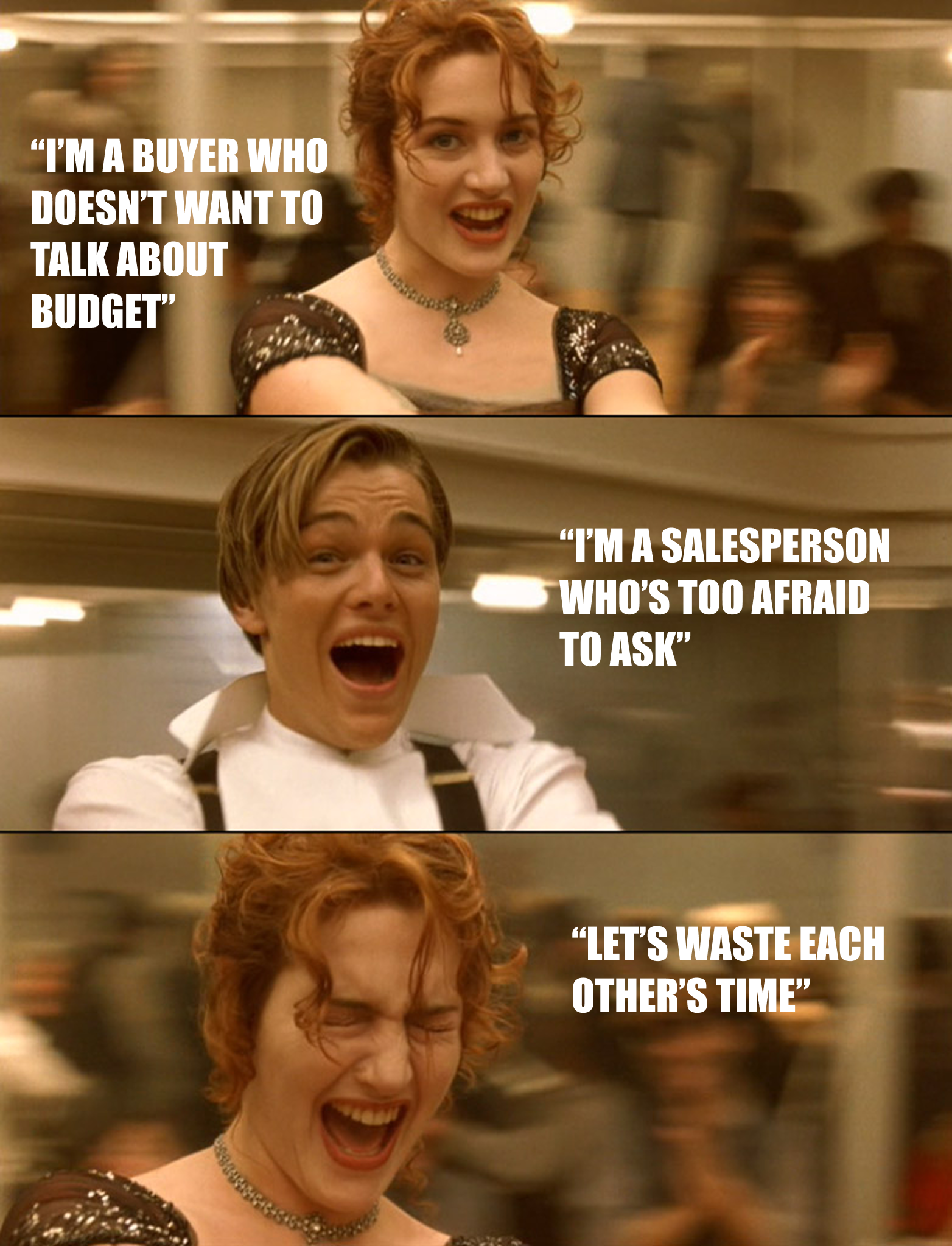
Buying group marketing is the only—I repeat, only—way to win these types of deals.
”I find that a lot of the time, a saboteur would come in at the end, like at the 11th hour of the deal,” says Tyler Bernstein, sales leader at Sendoso. “But if we had multi-threaded this like far sooner within the sales cycle with the rest of the committee, that most likely would've been avoided. You have to arm your champion with the arguments and case for helping others understand why they’re bringing technology on board.”
With that, let’s meet the whole buying group
A buying group role is not a title, by the way. That’s part of what makes buying-group focused go-to-market so tricky. If you have a CIO, a VP of IT, and an IT manager all join your call, that’s not three buying roles—it’s one. The technologist. Conversely, one person could wear multiple role hats. At a small company looking to buy a security software, the CIO could be the technologist and your champion.
Yours will be different! These are archetypal roles, designed to give you a starting point. Define what’s true for your company. Eventually, you can create a table that shows which roles tend to map to which.
Let’s meet each one.


The champion
This is the person who’s pushing to buy your product or service. They carry 90% of the evaluation burden, unless you help them lighten the load. They likely organize the calls, ask you how to run the evaluation process, and can sometimes be nervous about how much political capital they are spending on this decision.
- They’re forgiving and on your side.
- They’ll backchannel, overshare, and help you make your case.
- They want to make this work (contrary to popular belief, people want to spend money).
- This purchase often helps them advance their career.
Sometimes, too, your champion isn’t really your champion. They’re the primary evaluator, but you aren’t #1 on their day-one shotlist and they’re only evaluating because they’re curious, or their procurement process requires they involve a certain number of vendors.
You can figure this out by whether they ask late-stage “thinking through the purchase” questions. If they aren’t asking about detailed terms or expressing concern about rollout, worry.

The financier
This is the person in finance who ultimately approves spending money. Below a certain size, they may not be involved. The decider has their own budget. But over a certain size—say, $25k, or $100k—this person will need to review.
- Thinks a lot about “controls and governance” (hence they review over a certain dollar threshold).
- They’re exclusively focused on the return on investment.
- They are further from the problem than others—they need it explained.
- They are emotionally unattached from the product and curious about alternatives.
- They’re responsible to the board, and must explain this expense.
- At the end, they may demand a small discount just to test the relationship.

The influencer
This is the subject expert on the team who holds way more power than their title suggests. It’s someone like a developer advocate who’s nobody’s boss, but who everyone turns to with technical questions. They’re the solutions architect who’d been there for 22 years or the former customer hired in to be an advocate.
- They are ‘truth agents’ who see themselves as responsible to their profession first.
- They’re less concerned with short-term risks.
- They’re more persuaded by logic and philosophy.
- They’re probably less interested in doing the setup work.
- They appreciate being asked for their insights.

The decider
This is your champion’s boss. Sometimes the champion is the boss, but not usually. Even if they start out thinking they are, they will turn to this person for guidance. The decider is the one who writes their reviews, probably hired them, and holds the same goals—only more abstract. Whereas your champion may want to “increase conversion rates,” the decider joins board meetings and wants to know about bottom-line revenue.
The great challenge with deciders is that they’re often yo-yo delegators: They’ll tell the champion that the champion gets to decide. But, as they see the evaluation progress, they’ll weigh in and change things.
- They’re less concerned with details, more concerned with top-level strategy.
- They’re less emotionally attached to the purchase, so more skeptical.
- They’re more aware of cross-functional impacts.
- They deal in more abstraction, and say things like “value creation.”
- They want the absolute most concise version of the story.

The beneficiary
This is the evaluator who benefits, but only tangentially, and is just along for the ride. For example, the sales leader, in an evaluation where marketing is looking at a new martech tool. Yes, it’ll increase pipeline and marketing qualified accounts, but the sales leader is a lot more concerned about which deals will close this quarter.
- They’re more agnostic and more easily swayed than the champion.
- They want all the upsides without the downsides.
- They can be persuaded to share budget with the champion.
- They aren’t wed to buying, but are happy if it works out.
The procurer
The procurer is the person responsible for ensuring that the company makes good purchases—usually with a title like “procurement.” They are typically your and the champion’s nemesis, because it’s their job to play devil’s advocate and push and prod to see what they can carve out or discount.
They are not, however, evil: Good ones know their job is to ensure their company gets the best value for its money. The best approach is to surprise them with kindness. Invite them in, offer overwhelming transparency, and give them every reason to believe you mean the best.
- They consider the numbers above all else.
- Like an investigator, they want to figure out who’s lying about what.
- Their approach can sometimes feel like an inquisition.
- They set the internal policies and write the RFP templates.
- They will probably require the champion to evaluate multiple options.
- They report to the financier.

The technologist
The technologist is the team who has to implement whatever’s purchased. Usually that means IT, but not always. It can include the RevOps team, the supply chain team, the warehouse team, and anyone responsible for coding or integrations. The technologists are focused on, no surprise, technology.
- Most are fair—some are looking to prove they know more.
- They’re skeptical and tend to focus on what won’t work.
- They want to see evidence that it’s been done before.
- They’re already handling too many tickets and want to reduce work on themselves.
- They sometimes wonder if it’s smarter/cheaper to build versus buy.

The saboteur
The saboteur isn’t an outright role—it’s the person working behind the scenes to prevent the sale from happening. It’s the person who, after each meeting ends on the client’s side, says, “I really don’t know about this.” It can be anyone. The hat can change. Many people can be saboteurs.
It’s critical that you, the go-to-market team, figure out who those potential saboteurs are early and deliver consensus content that helps them realize how the rest of the group benefits.
- They’re looking for reasons not to buy.
- They may have an invested interest in it not working—like IT saying, “I can build this.”
In this case, our saboteur is IT (see the Clark Kent similarity?). They’re sabotaging your deal because after each call ends, they’re telling everyone, “I could code that for free, just say the word.” They’re giving everyone doubts about the value of the product.

The AI
Did you notice that we promised nine buying group roles, and only showed eight above? The ninth is AI. Everybody’s using it to do their research, and it’s acting like a filter over everyone’s understanding of your product.
Some things to know: AI doesn’t understand jokes. It’s very slow to pick up on rebrands and messaging updates. And it’s sometimes just terrible with nuance.
- It triangulates to what’s “true” by looking for many online sources that agree.
- Its search process isn’t too different from Google, but it summarizes more.
- It lacks business context, and so will give general answers.
- It can’t tell your competitor’s press releases apart from Forrester reports (yet).
The best way to reach the AI-ified buyer is the focus on your “distributed brand” strategy: Solicit as many customer reviews as possible on G2, TrustRadius, Reddit, Quora, and similar—and try to get them all to say the same consistent things about your same-named products and services.
All set to get buying group ready?
Your champion is evaluating with a group whether they’re aware of it or not. Many champions have been through 4-5 buying cycles prior, but that doesn’t mean those processes went well. Or that they know how to run a good evaluation. It’s your go-to-market team’s job to identify each of these roles on the account early, to “complete” the group—and then send them individualized messaging that draws them together into consensus content.
For more on how to do that, watch our buying group ‘how to’ webinar →

About the author
Service page feature

Account-based marketing


No matter how convincing that one champion seems, or how sure they are that they’re “the only person you need to speak with,” it’s almost never true.
Behind them are eight other people who will ultimately have a say. And blood is thicker than water. They are far more attached to that internal “family” than you can ever know. And though your champion may spend the initial discovery calls complaining about IT, procurement, and legal, when it comes down to it, they’re going to follow their advice over yours.
It’s a family affair. They’re dysfunctional, but they’re a family.
We marketers have to be honest with ourselves that this is the reality, and adapt our marketing to reach that entire buying group. We can’t just rely on our champion inviting us to dinner and it all goes well.
Get all 10 buying group resources →
An aside: Why do you hate your champion so much?
Your champion loves your product. But lots of champions could be forgiven for thinking that your sales team hates them in return, given how much of the evaluation burden sales places on them.
Over the nine-month sales cycle, there will be dozens of meetings, hundreds of emails, and loads of whiteboarding, deck-building, and backchanneling. It’s a crushing responsibility for one person. Your champion still has a job to do, and evaluating takes them away from it. It’s not fair, and not good for your chances of winning the deal.
“If you’re only talking to one person, you're asking them to do all of that internal heavy lifting,” says Hannah Swanson, VP of Marketing at Intentsify. “And honestly, they have a full-time job outside of buying whatever you're selling. So don't make it their problem to have to build this business case by themselves. It's worth it to multi-thread in.”
At the same time, there may be some toxic codependency at work. Your champion may be so eager to help that it tanks the deal. Sales doesn’t want to make things awkward by insisting they bring in their boss, and the champion doesn’t want to risk anything by letting others know they’re evaluating. So, they spin.
Buying group marketing is the only—I repeat, only—way to win these types of deals.
”I find that a lot of the time, a saboteur would come in at the end, like at the 11th hour of the deal,” says Tyler Bernstein, sales leader at Sendoso. “But if we had multi-threaded this like far sooner within the sales cycle with the rest of the committee, that most likely would've been avoided. You have to arm your champion with the arguments and case for helping others understand why they’re bringing technology on board.”
With that, let’s meet the whole buying group
A buying group role is not a title, by the way. That’s part of what makes buying-group focused go-to-market so tricky. If you have a CIO, a VP of IT, and an IT manager all join your call, that’s not three buying roles—it’s one. The technologist. Conversely, one person could wear multiple role hats. At a small company looking to buy a security software, the CIO could be the technologist and your champion.
Yours will be different! These are archetypal roles, designed to give you a starting point. Define what’s true for your company. Eventually, you can create a table that shows which roles tend to map to which.
Let’s meet each one.
The champion
This is the person who’s pushing to buy your product or service. They carry 90% of the evaluation burden, unless you help them lighten the load. They likely organize the calls, ask you how to run the evaluation process, and can sometimes be nervous about how much political capital they are spending on this decision.
- They’re forgiving and on your side.
- They’ll backchannel, overshare, and help you make your case.
- They want to make this work (contrary to popular belief, people want to spend money).
- This purchase often helps them advance their career.
Sometimes, too, your champion isn’t really your champion. They’re the primary evaluator, but you aren’t #1 on their day-one shotlist and they’re only evaluating because they’re curious, or their procurement process requires they involve a certain number of vendors.
You can figure this out by whether they ask late-stage “thinking through the purchase” questions. If they aren’t asking about detailed terms or expressing concern about rollout, worry.
The financier
This is the person in finance who ultimately approves spending money. Below a certain size, they may not be involved. The decider has their own budget. But over a certain size—say, $25k, or $100k—this person will need to review.
- Thinks a lot about “controls and governance” (hence they review over a certain dollar threshold).
- They’re exclusively focused on the return on investment.
- They are further from the problem than others—they need it explained.
- They are emotionally unattached from the product and curious about alternatives.
- They’re responsible to the board, and must explain this expense.
- At the end, they may demand a small discount just to test the relationship.
The influencer
This is the subject expert on the team who holds way more power than their title suggests. It’s someone like a developer advocate who’s nobody’s boss, but who everyone turns to with technical questions. They’re the solutions architect who’d been there for 22 years or the former customer hired in to be an advocate.
- They are ‘truth agents’ who see themselves as responsible to their profession first.
- They’re less concerned with short-term risks.
- They’re more persuaded by logic and philosophy.
- They’re probably less interested in doing the setup work.
- They appreciate being asked for their insights.
The decider
This is your champion’s boss. Sometimes the champion is the boss, but not usually. Even if they start out thinking they are, they will turn to this person for guidance. The decider is the one who writes their reviews, probably hired them, and holds the same goals—only more abstract. Whereas your champion may want to “increase conversion rates,” the decider joins board meetings and wants to know about bottom-line revenue.
The great challenge with deciders is that they’re often yo-yo delegators: They’ll tell the champion that the champion gets to decide. But, as they see the evaluation progress, they’ll weigh in and change things.
- They’re less concerned with details, more concerned with top-level strategy.
- They’re less emotionally attached to the purchase, so more skeptical.
- They’re more aware of cross-functional impacts.
- They deal in more abstraction, and say things like “value creation.”
- They want the absolute most concise version of the story.
The beneficiary
This is the evaluator who benefits, but only tangentially, and is just along for the ride. For example, the sales leader, in an evaluation where marketing is looking at a new martech tool. Yes, it’ll increase pipeline and marketing qualified accounts, but the sales leader is a lot more concerned about which deals will close this quarter.
- They’re more agnostic and more easily swayed than the champion.
- They want all the upsides without the downsides.
- They can be persuaded to share budget with the champion.
- They aren’t wed to buying, but are happy if it works out.
The procurer
The procurer is the person responsible for ensuring that the company makes good purchases—usually with a title like “procurement.” They are typically your and the champion’s nemesis, because it’s their job to play devil’s advocate and push and prod to see what they can carve out or discount.
They are not, however, evil: Good ones know their job is to ensure their company gets the best value for its money. The best approach is to surprise them with kindness. Invite them in, offer overwhelming transparency, and give them every reason to believe you mean the best.
- They consider the numbers above all else.
- Like an investigator, they want to figure out who’s lying about what.
- Their approach can sometimes feel like an inquisition.
- They set the internal policies and write the RFP templates.
- They will probably require the champion to evaluate multiple options.
- They report to the financier.
The technologist
The technologist is the team who has to implement whatever’s purchased. Usually that means IT, but not always. It can include the RevOps team, the supply chain team, the warehouse team, and anyone responsible for coding or integrations. The technologists are focused on, no surprise, technology.
- Most are fair—some are looking to prove they know more.
- They’re skeptical and tend to focus on what won’t work.
- They want to see evidence that it’s been done before.
- They’re already handling too many tickets and want to reduce work on themselves.
- They sometimes wonder if it’s smarter/cheaper to build versus buy.
The saboteur
The saboteur isn’t an outright role—it’s the person working behind the scenes to prevent the sale from happening. It’s the person who, after each meeting ends on the client’s side, says, “I really don’t know about this.” It can be anyone. The hat can change. Many people can be saboteurs.
It’s critical that you, the go-to-market team, figure out who those potential saboteurs are early and deliver consensus content that helps them realize how the rest of the group benefits.
- They’re looking for reasons not to buy.
- They may have an invested interest in it not working—like IT saying, “I can build this.”
In this case, our saboteur is IT (see the Clark Kent similarity?). They’re sabotaging your deal because after each call ends, they’re telling everyone, “I could code that for free, just say the word.” They’re giving everyone doubts about the value of the product.
The AI
Did you notice that we promised nine buying group roles, and only showed eight above? The ninth is AI. Everybody’s using it to do their research, and it’s acting like a filter over everyone’s understanding of your product.
Some things to know: AI doesn’t understand jokes. It’s very slow to pick up on rebrands and messaging updates. And it’s sometimes just terrible with nuance.
- It triangulates to what’s “true” by looking for many online sources that agree.
- Its search process isn’t too different from Google, but it summarizes more.
- It lacks business context, and so will give general answers.
- It can’t tell your competitor’s press releases apart from Forrester reports (yet).
The best way to reach the AI-ified buyer is the focus on your “distributed brand” strategy: Solicit as many customer reviews as possible on G2, TrustRadius, Reddit, Quora, and similar—and try to get them all to say the same consistent things about your same-named products and services.
All set to get buying group ready?
Your champion is evaluating with a group whether they’re aware of it or not. Many champions have been through 4-5 buying cycles prior, but that doesn’t mean those processes went well. Or that they know how to run a good evaluation. It’s your go-to-market team’s job to identify each of these roles on the account early, to “complete” the group—and then send them individualized messaging that draws them together into consensus content.
For more on how to do that, watch our buying group ‘how to’ webinar →
Resources
About the author
Service page feature
Account-based marketing
Meet the 9 buying group roles

Speakers
Other helpful resources
No matter how convincing that one champion seems, or how sure they are that they’re “the only person you need to speak with,” it’s almost never true.
Behind them are eight other people who will ultimately have a say. And blood is thicker than water. They are far more attached to that internal “family” than you can ever know. And though your champion may spend the initial discovery calls complaining about IT, procurement, and legal, when it comes down to it, they’re going to follow their advice over yours.
It’s a family affair. They’re dysfunctional, but they’re a family.
We marketers have to be honest with ourselves that this is the reality, and adapt our marketing to reach that entire buying group. We can’t just rely on our champion inviting us to dinner and it all goes well.
Get all 10 buying group resources →
An aside: Why do you hate your champion so much?
Your champion loves your product. But lots of champions could be forgiven for thinking that your sales team hates them in return, given how much of the evaluation burden sales places on them.
Over the nine-month sales cycle, there will be dozens of meetings, hundreds of emails, and loads of whiteboarding, deck-building, and backchanneling. It’s a crushing responsibility for one person. Your champion still has a job to do, and evaluating takes them away from it. It’s not fair, and not good for your chances of winning the deal.
“If you’re only talking to one person, you're asking them to do all of that internal heavy lifting,” says Hannah Swanson, VP of Marketing at Intentsify. “And honestly, they have a full-time job outside of buying whatever you're selling. So don't make it their problem to have to build this business case by themselves. It's worth it to multi-thread in.”
At the same time, there may be some toxic codependency at work. Your champion may be so eager to help that it tanks the deal. Sales doesn’t want to make things awkward by insisting they bring in their boss, and the champion doesn’t want to risk anything by letting others know they’re evaluating. So, they spin.
Buying group marketing is the only—I repeat, only—way to win these types of deals.
”I find that a lot of the time, a saboteur would come in at the end, like at the 11th hour of the deal,” says Tyler Bernstein, sales leader at Sendoso. “But if we had multi-threaded this like far sooner within the sales cycle with the rest of the committee, that most likely would've been avoided. You have to arm your champion with the arguments and case for helping others understand why they’re bringing technology on board.”
With that, let’s meet the whole buying group
A buying group role is not a title, by the way. That’s part of what makes buying-group focused go-to-market so tricky. If you have a CIO, a VP of IT, and an IT manager all join your call, that’s not three buying roles—it’s one. The technologist. Conversely, one person could wear multiple role hats. At a small company looking to buy a security software, the CIO could be the technologist and your champion.
Yours will be different! These are archetypal roles, designed to give you a starting point. Define what’s true for your company. Eventually, you can create a table that shows which roles tend to map to which.
Let’s meet each one.
The champion
This is the person who’s pushing to buy your product or service. They carry 90% of the evaluation burden, unless you help them lighten the load. They likely organize the calls, ask you how to run the evaluation process, and can sometimes be nervous about how much political capital they are spending on this decision.
- They’re forgiving and on your side.
- They’ll backchannel, overshare, and help you make your case.
- They want to make this work (contrary to popular belief, people want to spend money).
- This purchase often helps them advance their career.
Sometimes, too, your champion isn’t really your champion. They’re the primary evaluator, but you aren’t #1 on their day-one shotlist and they’re only evaluating because they’re curious, or their procurement process requires they involve a certain number of vendors.
You can figure this out by whether they ask late-stage “thinking through the purchase” questions. If they aren’t asking about detailed terms or expressing concern about rollout, worry.
The financier
This is the person in finance who ultimately approves spending money. Below a certain size, they may not be involved. The decider has their own budget. But over a certain size—say, $25k, or $100k—this person will need to review.
- Thinks a lot about “controls and governance” (hence they review over a certain dollar threshold).
- They’re exclusively focused on the return on investment.
- They are further from the problem than others—they need it explained.
- They are emotionally unattached from the product and curious about alternatives.
- They’re responsible to the board, and must explain this expense.
- At the end, they may demand a small discount just to test the relationship.
The influencer
This is the subject expert on the team who holds way more power than their title suggests. It’s someone like a developer advocate who’s nobody’s boss, but who everyone turns to with technical questions. They’re the solutions architect who’d been there for 22 years or the former customer hired in to be an advocate.
- They are ‘truth agents’ who see themselves as responsible to their profession first.
- They’re less concerned with short-term risks.
- They’re more persuaded by logic and philosophy.
- They’re probably less interested in doing the setup work.
- They appreciate being asked for their insights.
The decider
This is your champion’s boss. Sometimes the champion is the boss, but not usually. Even if they start out thinking they are, they will turn to this person for guidance. The decider is the one who writes their reviews, probably hired them, and holds the same goals—only more abstract. Whereas your champion may want to “increase conversion rates,” the decider joins board meetings and wants to know about bottom-line revenue.
The great challenge with deciders is that they’re often yo-yo delegators: They’ll tell the champion that the champion gets to decide. But, as they see the evaluation progress, they’ll weigh in and change things.
- They’re less concerned with details, more concerned with top-level strategy.
- They’re less emotionally attached to the purchase, so more skeptical.
- They’re more aware of cross-functional impacts.
- They deal in more abstraction, and say things like “value creation.”
- They want the absolute most concise version of the story.
The beneficiary
This is the evaluator who benefits, but only tangentially, and is just along for the ride. For example, the sales leader, in an evaluation where marketing is looking at a new martech tool. Yes, it’ll increase pipeline and marketing qualified accounts, but the sales leader is a lot more concerned about which deals will close this quarter.
- They’re more agnostic and more easily swayed than the champion.
- They want all the upsides without the downsides.
- They can be persuaded to share budget with the champion.
- They aren’t wed to buying, but are happy if it works out.
The procurer
The procurer is the person responsible for ensuring that the company makes good purchases—usually with a title like “procurement.” They are typically your and the champion’s nemesis, because it’s their job to play devil’s advocate and push and prod to see what they can carve out or discount.
They are not, however, evil: Good ones know their job is to ensure their company gets the best value for its money. The best approach is to surprise them with kindness. Invite them in, offer overwhelming transparency, and give them every reason to believe you mean the best.
- They consider the numbers above all else.
- Like an investigator, they want to figure out who’s lying about what.
- Their approach can sometimes feel like an inquisition.
- They set the internal policies and write the RFP templates.
- They will probably require the champion to evaluate multiple options.
- They report to the financier.
The technologist
The technologist is the team who has to implement whatever’s purchased. Usually that means IT, but not always. It can include the RevOps team, the supply chain team, the warehouse team, and anyone responsible for coding or integrations. The technologists are focused on, no surprise, technology.
- Most are fair—some are looking to prove they know more.
- They’re skeptical and tend to focus on what won’t work.
- They want to see evidence that it’s been done before.
- They’re already handling too many tickets and want to reduce work on themselves.
- They sometimes wonder if it’s smarter/cheaper to build versus buy.
The saboteur
The saboteur isn’t an outright role—it’s the person working behind the scenes to prevent the sale from happening. It’s the person who, after each meeting ends on the client’s side, says, “I really don’t know about this.” It can be anyone. The hat can change. Many people can be saboteurs.
It’s critical that you, the go-to-market team, figure out who those potential saboteurs are early and deliver consensus content that helps them realize how the rest of the group benefits.
- They’re looking for reasons not to buy.
- They may have an invested interest in it not working—like IT saying, “I can build this.”
In this case, our saboteur is IT (see the Clark Kent similarity?). They’re sabotaging your deal because after each call ends, they’re telling everyone, “I could code that for free, just say the word.” They’re giving everyone doubts about the value of the product.
The AI
Did you notice that we promised nine buying group roles, and only showed eight above? The ninth is AI. Everybody’s using it to do their research, and it’s acting like a filter over everyone’s understanding of your product.
Some things to know: AI doesn’t understand jokes. It’s very slow to pick up on rebrands and messaging updates. And it’s sometimes just terrible with nuance.
- It triangulates to what’s “true” by looking for many online sources that agree.
- Its search process isn’t too different from Google, but it summarizes more.
- It lacks business context, and so will give general answers.
- It can’t tell your competitor’s press releases apart from Forrester reports (yet).
The best way to reach the AI-ified buyer is the focus on your “distributed brand” strategy: Solicit as many customer reviews as possible on G2, TrustRadius, Reddit, Quora, and similar—and try to get them all to say the same consistent things about your same-named products and services.
All set to get buying group ready?
Your champion is evaluating with a group whether they’re aware of it or not. Many champions have been through 4-5 buying cycles prior, but that doesn’t mean those processes went well. Or that they know how to run a good evaluation. It’s your go-to-market team’s job to identify each of these roles on the account early, to “complete” the group—and then send them individualized messaging that draws them together into consensus content.
For more on how to do that, watch our buying group ‘how to’ webinar →
About the author
Service page feature